
Updates
1X.
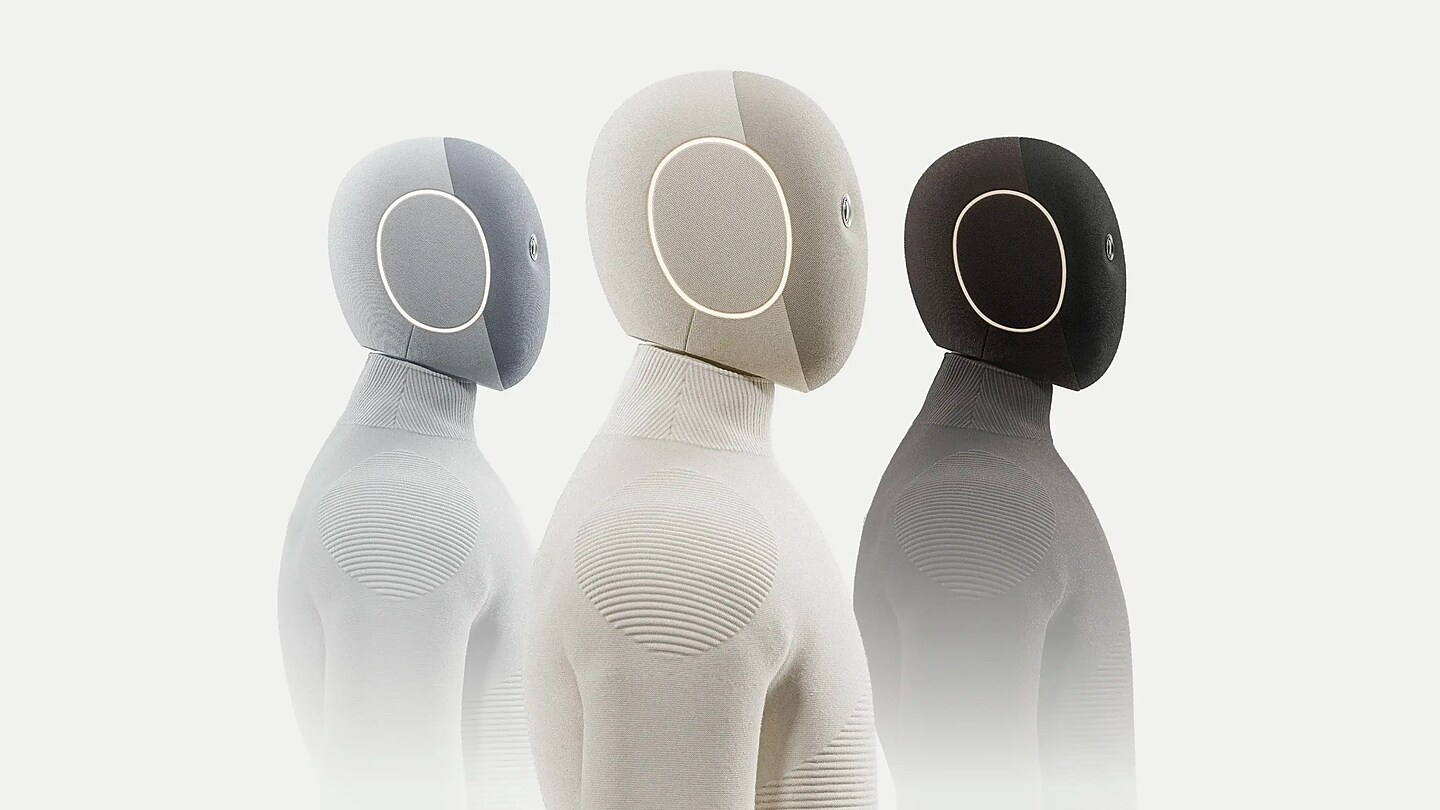
1X builds humanoid robots for the home. Its robot, NEO, stands five foot six and weighs 66 pounds. It is made to do chores in houses where people actually live, and orders are open now with a $200 deposit.
The company designs its own hardware and its own AI model, and sells the result as one product. That is the hard version of the problem. A robot in a home cannot be caged off the way a robot in a warehouse can. The machine has to be safe by construction and quiet enough to ignore. And it has to stay useful, week after week.
What they're building
NEO is soft where most humanoids are hard. Tendon-driven actuators keep its movements safe. The hardware is wrapped in a 3D lattice polymer under a machine-washable knit suit, and the joints are covered from the outside so the surface is pinch proof. At 22 decibels it runs quieter than a modern refrigerator; it lifts 154 pounds and carries 55. Those are appliance constraints. A lab demo never has to meet them.
The intelligence is Redwood, 1X's generalist AI model. It is among the first vision-language-action models to control locomotion jointly with manipulation, which lets the robot brace against a wall or lean while it works. Behind it sits a world model, a learned simulator that imagines how a scene responds to a proposed action. 1X uses it to evaluate policies across millions of scenarios before they run on hardware. NEO ships with foundational autonomy; for tasks past its current skill, owners can schedule a remote 1X expert to supervise while Redwood trains on the data, successes and failures both.
Why we backed the founders and team
The home is the hardest deployment environment in robotics. Every house is laid out differently and the objects in it are unstructured. The safety bar is absolute, because the robot shares rooms with children and pets. Most of the work here does not demo well: actuator design, suit textiles, safety margins, and the slow accumulation of training data from offices and real homes. 1X chose to build the hardware and the model at once, because in this market the pieces do not work separately.
The first general-purpose machine in the home will arrive as an appliance rather than a demo, one that works, week after week, in a house it has never seen before. 1X is building that machine.