
Updates
Apptronik.
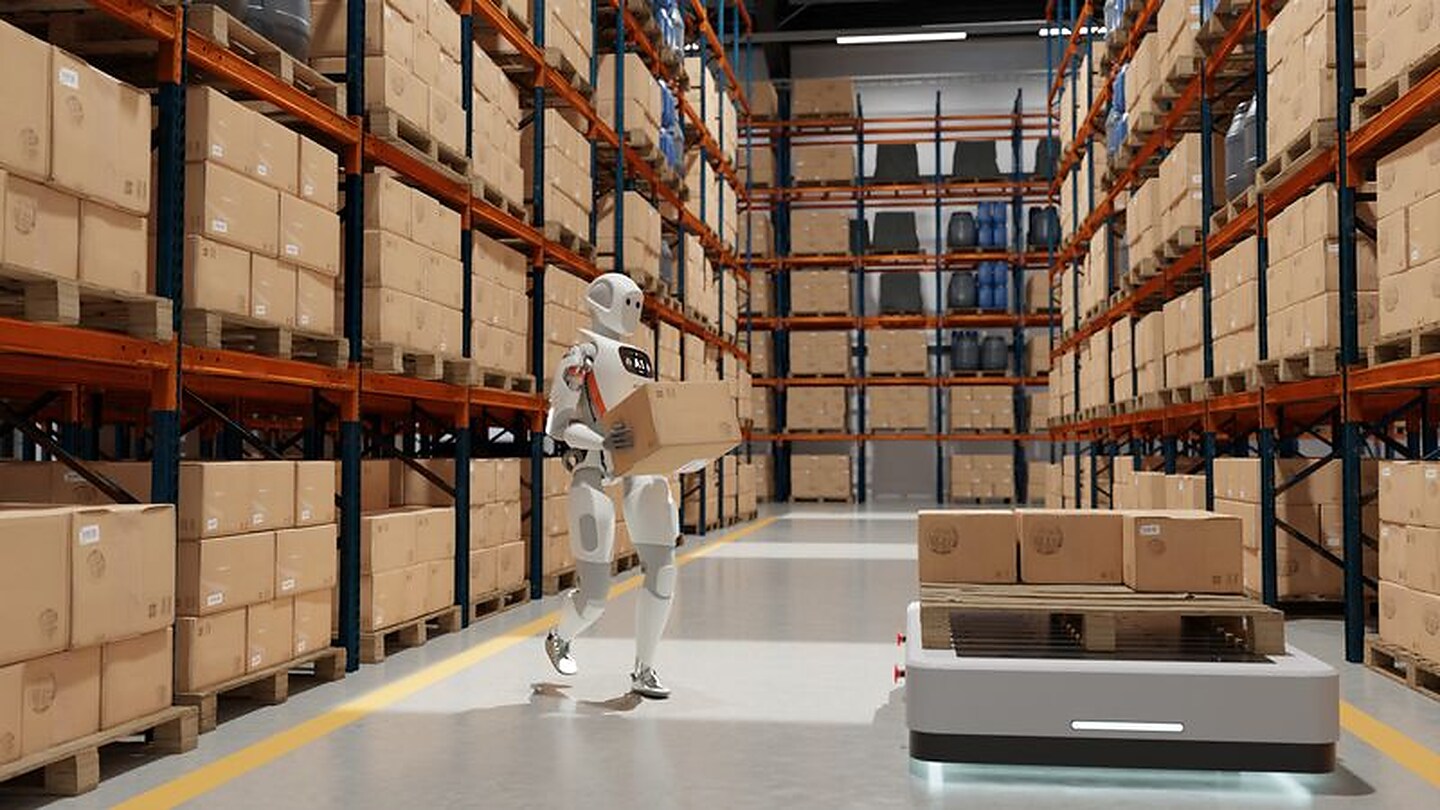
Apptronik builds Apollo, a general-purpose humanoid robot for industrial work. The company spun out of the Human Centered Robotics Lab at the University of Texas at Austin, where the team worked on NASA's Valkyrie; before Apollo it built exoskeletons, humanoid torsos, and biped platforms. That lineage shows in the product. Apollo is designed for mass manufacture rather than the demo reel.
The robot stands 5'8", weighs 160 pounds, lifts 55 pounds, and runs four hours on a hot-swappable battery pack. It is aimed at the work warehouses and factories struggle to staff: trailer unloading, case picking, palletization, machine tending, line replenishment.
What they're building
The case for the humanoid form is simple. Industrial facilities were built for human bodies, from the shelf heights and the tools to the doorways. There are millions of special-purpose robots that each do one or two things; Apptronik's bet is one robot that can do many, dropped into existing facilities without rebuilding them. Apollo is modular. It can run on legs, sit on a stationary mount, or ride a mobility platform, depending on the task.
The less visible work is in safety and deployment. Apollo carries defined perimeter and impact zones, pausing the moment something moves into its impact radius, and it ships with software for point-and-click task control. The company sells it as robots-as-a-service, which puts the uptime problem on Apptronik instead of the customer.
Why we backed the founders and team
Humanoid robots are an assembly problem, a matter of actuators, batteries, perception, control software, and a supply chain that can produce all of it at a cost a warehouse will pay. None of that demos well. It is hardware revisions, field reliability, and safety engineering, the long middle. Apptronik spent years there before Apollo existed, and built a team that can keep working through it.
We back companies on the hard frontier, and physical labor is as hard as frontiers get. If general-purpose robots reach industrial reliability at industrial cost, the companies that own both the hardware and the deployment model will matter for decades. Apptronik is building like it intends to be one of them.