
Updates
Bud Break Innovations.
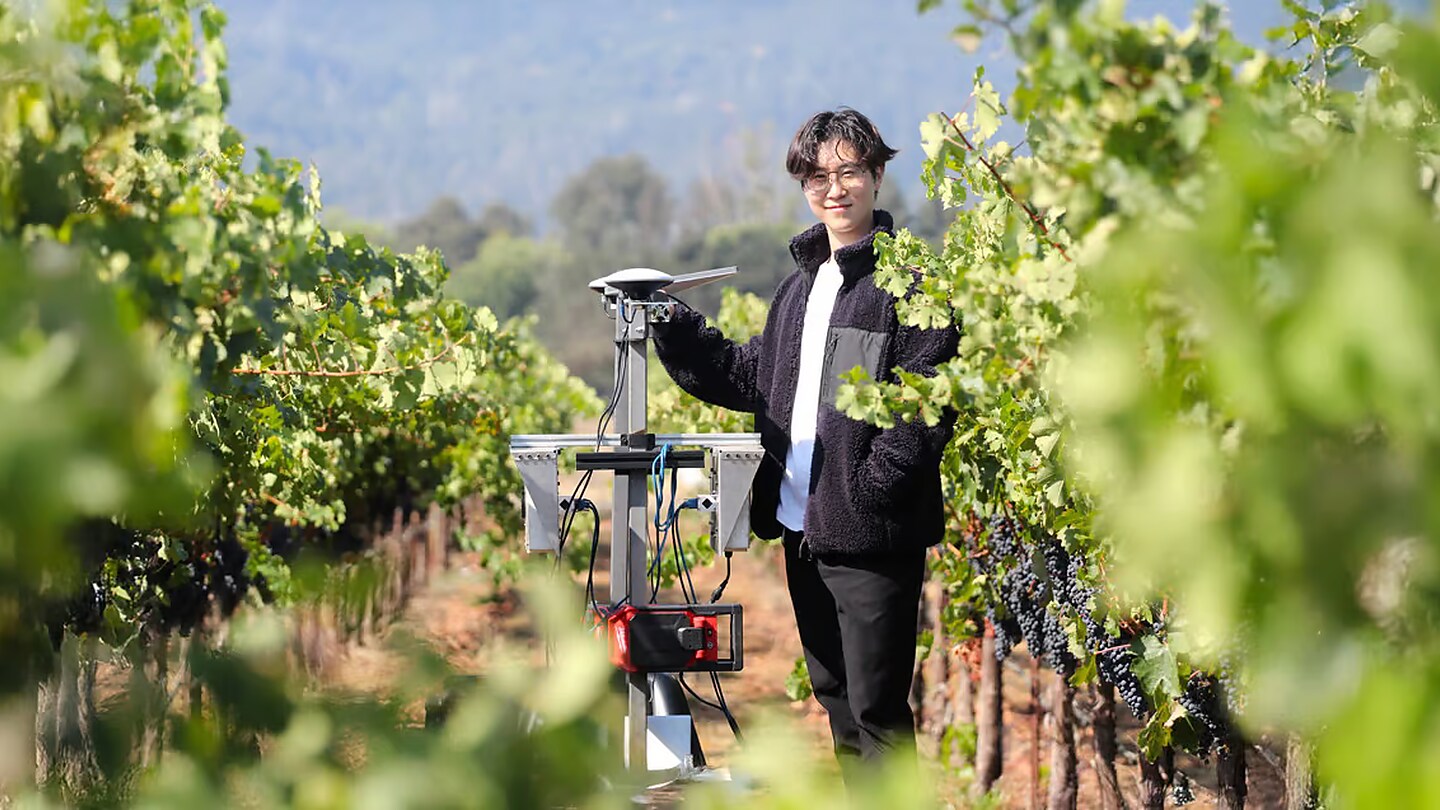
Budbreak Innovations builds autonomous scouting robots for specialty agriculture. Its robot, Emma, drives vineyard and orchard rows on its own, photographing every plant in high resolution. The company's AI turns those images into a per-plant record of disease, canopy condition, and crop load. The record amounts to a digital twin of the field, updated with every pass.
Crop scouting today is mostly people walking rows and sampling what they can reach. Emma scans every plant. The robot is already working in wine grapes as well as blueberries and lettuce, with deployments across Napa, Sonoma, Lodi, and the Finger Lakes. The company is taking applications for its 2026 closed beta.
What they're building
Emma runs ATV-mounted or as a standalone autonomous ground robot. It handles slopes and variable row widths, and it works in both sunny and cloudy conditions with minimal setup on the farm. The detection models flag red blotch, leafroll, powdery mildew, downy mildew, and nutrient deficiencies. Catching these earlier cuts crop loss and unnecessary sprays, and it lets growers isolate infected areas before problems spread. The same imagery drives yield estimation. Counts of buds, clusters, and berries, along with weight forecasts, inform thinning and irrigation as well as labor planning.
Results land in BudBase, the company's analytics platform. Growers see a map of exactly which vines need attention, filterable by block, with priority plants flagged and an exportable action plan. Every scan also feeds the models, so detection gets more accurate as acreage accumulates. The company joined Cornell Tech's Runway startup program in 2025, and Cornell research has shown robotic scouting matching highly trained human scouts at detecting vineyard diseases.
Why we backed the founders and team
Field robotics is a hard frontier. The machine has to survive mud, dust, slope, and glare, and the models have to tell powdery mildew from dirt on a leaf, from a moving platform, week after week as the biology changes. None of this demos well. It gets built row by row, season by season, on working farms. That is the kind of work we want to back.
Budbreak is also an assembly story. Cameras, an autonomy stack, plant-pathology models, and grower software combine into one loop: scan, map, action plan, and back into the next model. Specialty crops carry high value per acre and a shrinking labor pool. The grower who sees every plant first makes better calls on sprays, water, and harvest, and Budbreak is building the machine that lets a grower see every plant.