
Updates
Starcloud.
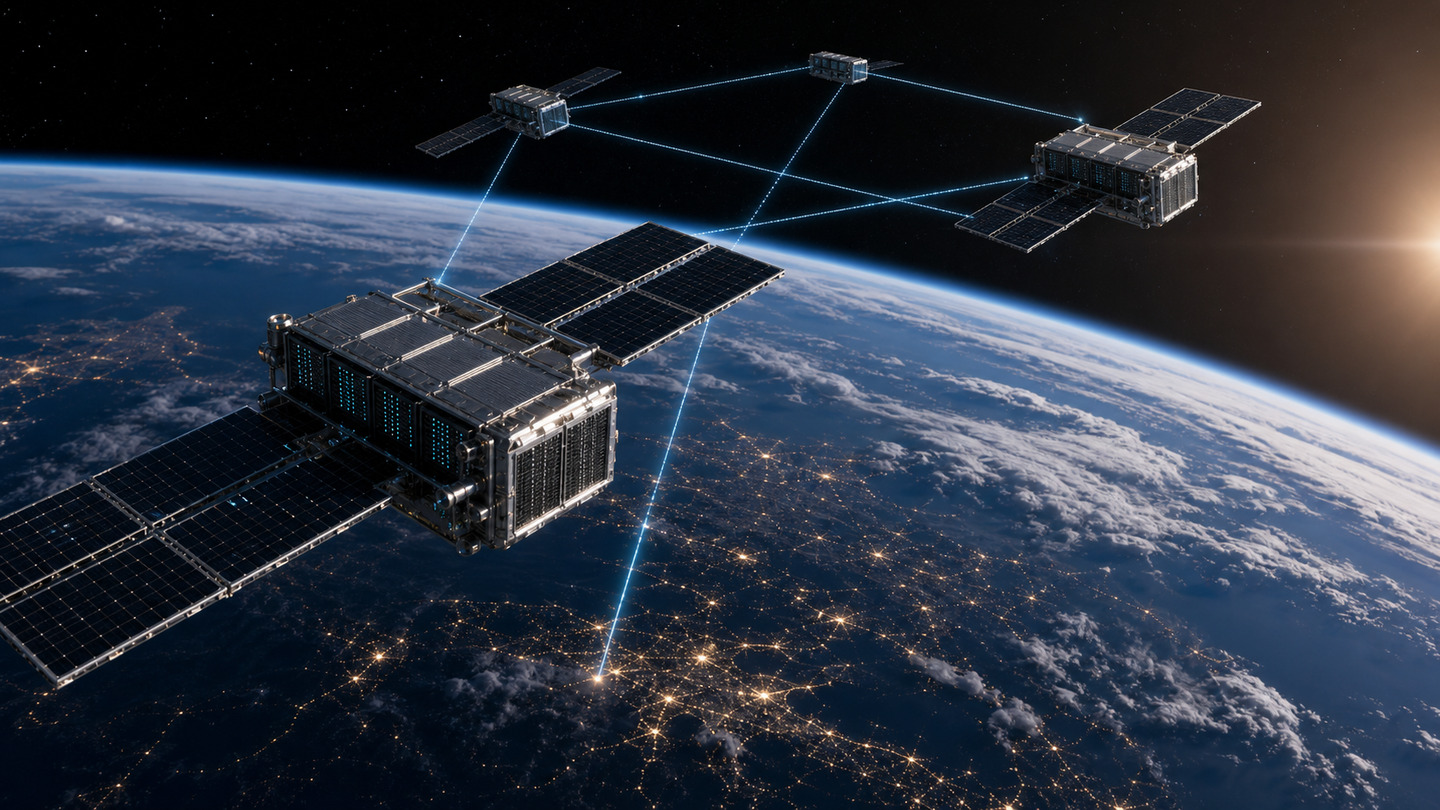
Starcloud builds data centers in orbit. The binding constraint on AI compute has shifted from chips to power. In practice that means land, cooling water, grid interconnects, and the years it takes to permit a gigawatt on Earth. Starcloud's answer is to put the compute where the sun never sets and waste heat radiates straight to deep space.
The team maps to the problem. Ezra Feilden, co-founder and CTO, spent a decade designing satellites and deployable structures at Airbus Defence and Space and Oxford Space Systems. Adi Oltean, the co-founder and chief engineer, came from SpaceX, where he was a principal software engineer after twenty years at Microsoft working on GPU clusters. Philip Johnston, co-founder and CEO, worked on satellite projects for national space agencies as a consultant before starting the company. They are working through a numbered flight roadmap, Starcloud-1 through Starcloud-4, and the company points to coverage of the first AI model trained in space.
What they're building
An orbital data center is three subsystems that have to hold together: solar arrays large enough to feed a compute cluster, radiators that dump waste heat to deep space, and the racks of accelerators in between. In the right orbit the arrays see near-continuous sunlight, so power is steady without batteries or backup generation. Cooling is radiative rather than evaporative, with no water, chillers, or diesel.
The stated goal is to "grow to gigawatt scale without terrestrial constraints." That means no land acquisition, no interconnection queue, and no county permitting fight. The first flights are demonstrations. The architecture is designed to scale past them.
Why we backed the founders and team
Starcloud sits where three of our sectors (AI, energy, and space) stop being separate. It is an assembly problem, one that joins launch economics, deployable structures, thermal engineering, radiation-tolerant compute, and the operating discipline of a cloud provider into one machine nobody can buy off a shelf. That is the kind of company we look for, because the assembled whole is the moat.
The work from here is structural test and thermal margin, then flight after flight of hardware that has to survive. This is the long middle, where little of it demos well. If compute demand keeps compounding, someone has to build the power plant that goes with it. Starcloud is betting the cheapest place to put it is orbit. We think the physics is on their side.